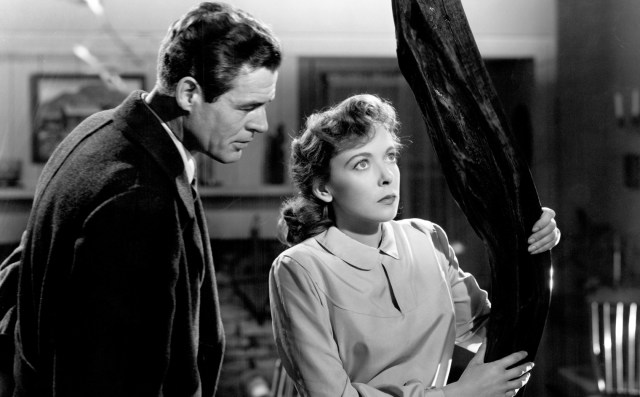
In this weekly series, The Lonely Film Critic highlights an older release of interest, whether it be an oft-overlooked gem or a classic worth revisiting. On tap for this week is another lesser-known noir from the 1950s, lushly directed by the great Nicholas Ray and with uncredited assistance from star Ida Lupino.
Tag: 1950s
Weekly Spotlight #9: The Browning Version (Asquith, 1951)
In this weekly series, The Lonely Film Critic highlights an older release of interest, whether it be an oft-overlooked gem or a classic worth revisiting. As the current school year comes to a close, we examine the power and pathos of a lesser-known story about student-teacher relationships: Anthony Asquith’s excellent adaptation of Terence Rattigan’s The Browning Version.
Weekly Spotlight #8: Ballad of a Soldier (Chukhray, 1959)
In this weekly series, The Lonely Film Critic highlights an older release of interest, whether it be an oft-overlooked gem or a classic worth revisiting. This week, we introduce you to the Soviet-era war classic Ballad of a Soldier in remembrance of the 75th anniversary of D-Day.
Weekly Spotlight #1: Murder by Contract (Lerner, 1958)
In this new weekly series, The Lonely Film Critic highlights an older release of interest, whether it be an oft-overlooked gem or a classic worth revisiting. This week, our inaugural film is Irving Lerner’s jaunty existentialist noir Murder by Contract.
Kiss Me Deadly (Aldrich, 1955)
One thing’s for sure: I’ve never watched a noir quite like Kiss Me Deadly before. From the moment it begins, with Cloris Leachman breathlessly running on that deserted road, it never lets up on its relentless assault on our senses.
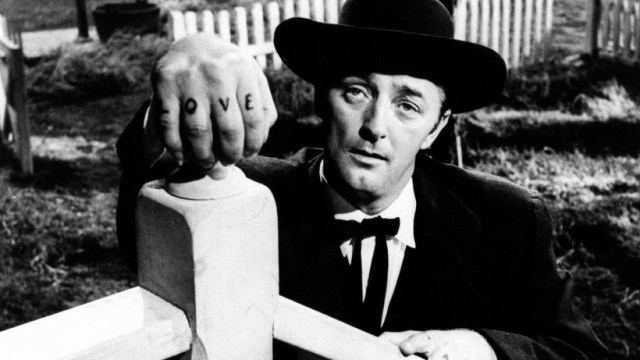
The Night of the Hunter (Laughton, 1955)
Charles Laughton’s The Night of the Hunter is justly heralded for its craft, and I’ll join in the lament that Laughton never got the recognition he deserved for this.
Pickpocket (Bresson, 1959)
Pickpocket is my first Bresson (and I’m certainly not alone in that camp), and though the sheer austerity of his style takes a bit of getting used to, in the end I understand why so many historians deeply admire it—if not love it outright.
Hiroshima Mon Amour (Resnais, 1959)
Traumas and memories coalesce in Alain Resnais’ debut, Hiroshima Mon Amour. Though it primarily follows the brief romance between a French actress and a Japanese architect, which is nourished by long, stark conversations, the film is also fundamentally about the aftermath of human destruction.
House on Haunted Hill (Castle, 1959)
House on Haunted Hill is, like most William Castle films, a gimmicky bauble that puts all reason to the side and wants nothing more than to entertain you. And it succeeds, at least for me.
Night of the Demon (Tourneur, 1957)
Night/Curse of the Demon is not top-tier Jacques Tourneur, and if he were still alive today, I think Tourneur would say the same.