
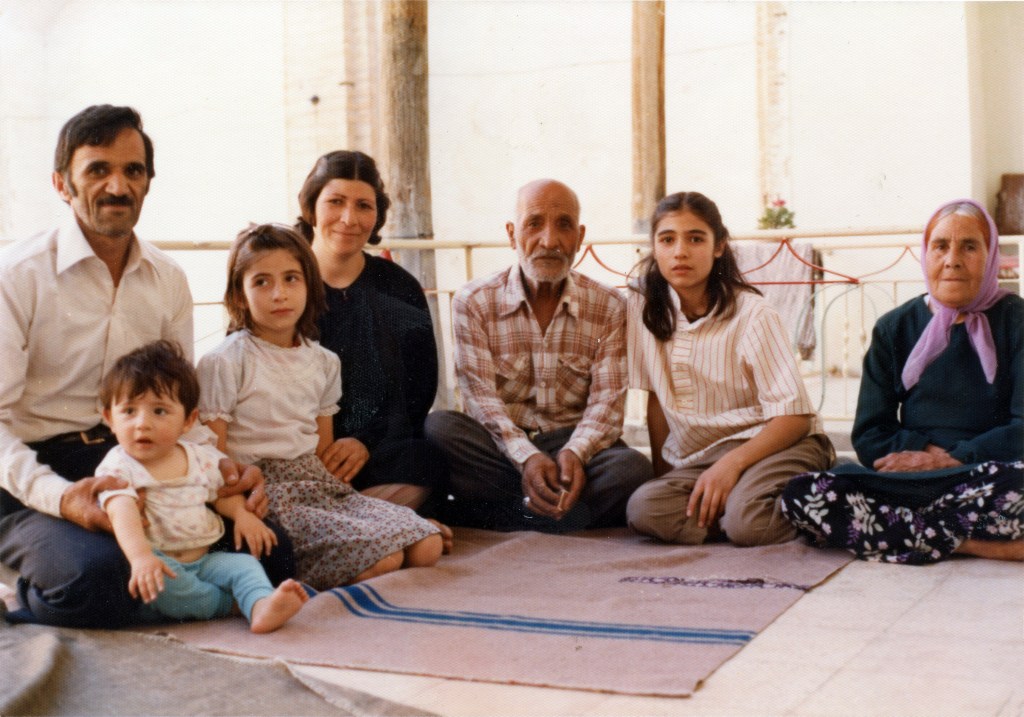
With war in Iran once again dominating the headlines, Pegah Ahangarani’s intimate, heartfelt excavation of her country’s tumultuous history could hardly arrive at a more resonant moment. Yet, as she makes clear in the film’s sobering coda, the timing is hardly a blessing in disguise. The joint U.S.-Israeli offensive battering Iran and imperiling global crude oil exports is merely the latest wilted petal on a flower long watered with bloodshed, its roots buried in the 1979 revolution that brought Ayatollah Khomeini to power. It is here that Ahangarani begins, structuring her film in five chapters, each devoted to a beloved relative or mentor whose own, more intimate acts of resistance helped shape her life: her father, her favourite schoolteacher, her uncle, her close friend, and, finally, her newborn daughter.
Rehearsals for a Revolution is a poignant excavation of Ahangarani’s personal archive, defined as much by what she manages to recover as by the absences that cruelly circumscribe what remains. This tension is most affecting in the third chapter, devoted to her late uncle Rashid. A participant in the 1999 student protests in Tehran, Rashid was arrested and imprisoned by authorities and took his own life shortly thereafter, at just 21. Ahangarani admits in voiceover that she nearly abandoned the chapter four times. What remains of her uncle amounts to three childhood photographs, 20 seconds of 8mm footage, and a stack of cassette tapes containing personal recordings he made on a Sony Walkman. Yet the furtive gaze captured in one of those photographs becomes enough to compel her forward: to reconstruct his story from these scant remnants, resurrect his presence, and honour the fierce resilience he embodied during his brief life.
It is here that the film articulates its most profound faith in the archive—not as a static repository of the past, but as something malleable, fragmentary, and alive. Memories can be threaded together and disentangled, allowing new truths to emerge from histories that might otherwise have disappeared. The fragments may never be sufficient, but their very insufficiency becomes part of the story.
Ahangarani’s approach is remarkably elegant, resisting the temptation to impose tidy correspondences between the personal and the historical—a tendency that has weighed down more conventional documentary portraits. Instead, Rehearsals for a Revolution unfolds as an elegy for the country that gave birth to and raised her, a place where beauty and brutality, tenderness and political violence, exist in uneasy proximity. The archival material, though occasionally repetitive out of necessity, is consistently vital and often harrowing. This is especially true of the footage Ahangarani herself shot during the protests surrounding Iran’s disputed 2009 presidential election, which forms the film’s fourth chapter.
Yet for every image of fear, Ahangarani finds an answering gesture of grace. For all the forces of repression and despair that haunt Rehearsals for a Revolution, hope proves the more enduring impulse. The film is not simply a love letter to the men and women whose individual acts of courage left an indelible mark on Ahangarani; it is also an expression of solidarity with the Iranian people and their enduring belief in a freer future. What emerges is a deeply moving, formally assured testament to the persistence of memory—and to the stubborn, necessary perseverance of hope.

Rehearsals for a Revolution had its Canadian premiere at TIFF in the Centrepiece programme on Tuesday, September 15, 2026.

